
 Image 1 of 2
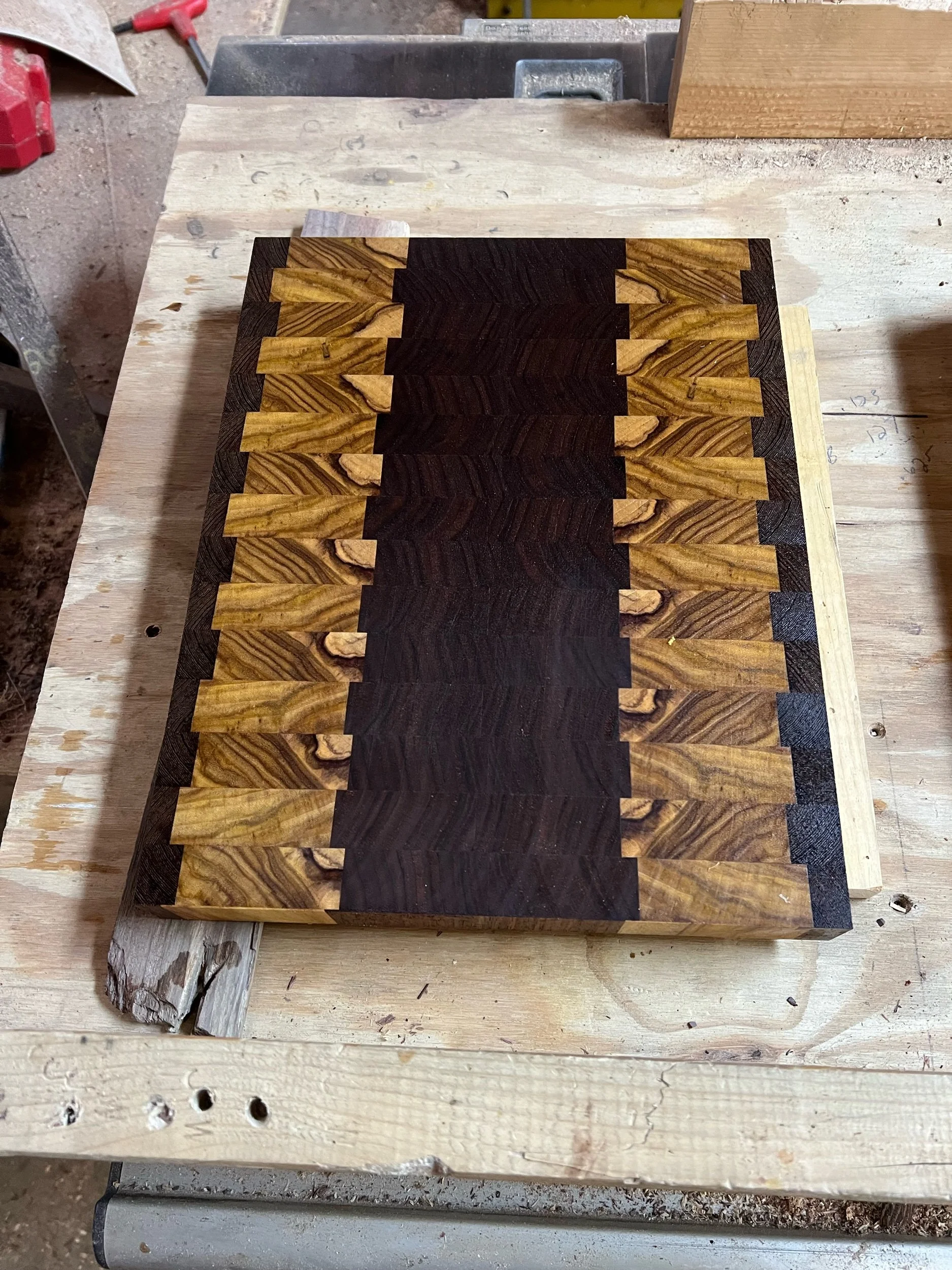 Image 2 of 2
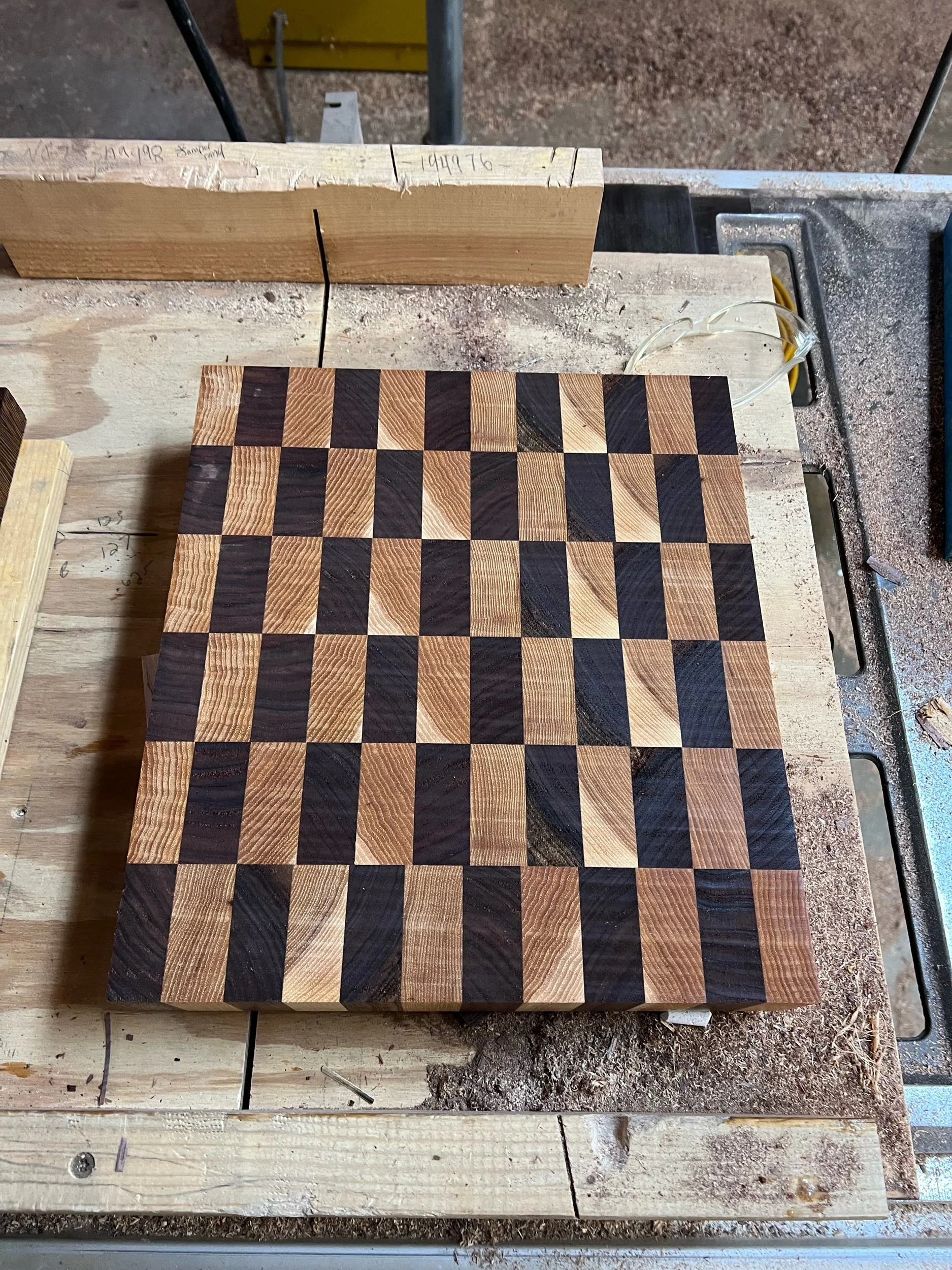
An end grain cutting board is considered superior to both edge grain and face grain boards primarily due to the orientation of the wood fibers, which offers distinct advantages in durability, knife preservation, and sanitation.
🔪 Superior Durability and "Self-Healing"
The main difference lies in how the cutting surface is presented:
• End Grain: The surface of an end grain board exposes the ends of the wood fibers, which stand vertically, perpendicular to the cutting surface. Think of them as a dense bundle of very short, upright straws. When a knife descends, the blade slides between these vertical fibers, pushing them apart. Once the knife is lifted, these fibers are better able to close back up, giving the board a remarkable "self-healing" property. This significantly reduces the visible wear and tear, preventing deep, permanent grooves.
• Edge/Face Grain (Long Grain): In edge or face grain boards, the long wood fibers run horizontally, parallel to the cutting surface. When a knife descends, it severs the long fibers crosswise, creating permanent, noticeable cuts and grooves in the surface. This leads to quicker deterioration of the board's surface.
🛡️ Knife Edge Preservation
End grain boards are much gentler on knife edges, helping your knives stay sharper for longer.
• When a sharp edge hits an end grain surface, the blade is being cushioned and separated by the vertical fibers. The fiber ends give way, which reduces the impact and stress on the delicate knife edge.
• When a blade cuts into edge or face grain, it is forced to slice through the dense, horizontal wood fibers, which acts as a harder, more abrasive barrier. This resistance can dull a knife edge more quickly over time.
💧 Enhanced Hygiene
The vertical, porous structure of the end grain helps with sanitation, particularly when boards are properly maintained:
• Because the wood fibers stand upright, any moisture or bacteria that enters the board's surface tends to be drawn into the center of the wood where it is held. Wood naturally has antimicrobial properties, and once drawn deeper into the board away from oxygen, the bacteria will typically die off.
• Since end grain boards resist deep cuts and gouges better, they don't develop the open channels and crevices that can occur in scarred edge/face grain boards, which can otherwise trap food particles and moisture.
In summary, while edge grain boards are often more affordable and require less frequent oiling, end grain boards are the professional's choice for heavy-duty prep work because they offer superior durability, are significantly kinder to expensive knives, and stay smoother and more sanitary over their lifespan.
An end grain cutting board is considered superior to both edge grain and face grain boards primarily due to the orientation of the wood fibers, which offers distinct advantages in durability, knife preservation, and sanitation.
🔪 Superior Durability and "Self-Healing"
The main difference lies in how the cutting surface is presented:
• End Grain: The surface of an end grain board exposes the ends of the wood fibers, which stand vertically, perpendicular to the cutting surface. Think of them as a dense bundle of very short, upright straws. When a knife descends, the blade slides between these vertical fibers, pushing them apart. Once the knife is lifted, these fibers are better able to close back up, giving the board a remarkable "self-healing" property. This significantly reduces the visible wear and tear, preventing deep, permanent grooves.
• Edge/Face Grain (Long Grain): In edge or face grain boards, the long wood fibers run horizontally, parallel to the cutting surface. When a knife descends, it severs the long fibers crosswise, creating permanent, noticeable cuts and grooves in the surface. This leads to quicker deterioration of the board's surface.
🛡️ Knife Edge Preservation
End grain boards are much gentler on knife edges, helping your knives stay sharper for longer.
• When a sharp edge hits an end grain surface, the blade is being cushioned and separated by the vertical fibers. The fiber ends give way, which reduces the impact and stress on the delicate knife edge.
• When a blade cuts into edge or face grain, it is forced to slice through the dense, horizontal wood fibers, which acts as a harder, more abrasive barrier. This resistance can dull a knife edge more quickly over time.
💧 Enhanced Hygiene
The vertical, porous structure of the end grain helps with sanitation, particularly when boards are properly maintained:
• Because the wood fibers stand upright, any moisture or bacteria that enters the board's surface tends to be drawn into the center of the wood where it is held. Wood naturally has antimicrobial properties, and once drawn deeper into the board away from oxygen, the bacteria will typically die off.
• Since end grain boards resist deep cuts and gouges better, they don't develop the open channels and crevices that can occur in scarred edge/face grain boards, which can otherwise trap food particles and moisture.
In summary, while edge grain boards are often more affordable and require less frequent oiling, end grain boards are the professional's choice for heavy-duty prep work because they offer superior durability, are significantly kinder to expensive knives, and stay smoother and more sanitary over their lifespan.